Mostrando entradas con la etiqueta Natural Science. Mostrar todas las entradas

martes, 9 de junio de 2020

Let's plant a seed!

Good morning, everyone!

How are you today? Today is Tuesday and it's a sunny.

Hoy os voy a proponer un reto relacionado con las plantas. ¿Qúe os parece si nos volvemos jardineros y jardineras por unos días? ¿Os apetece? ¡Pues allá vamos!

Materiales necesarios:
  1. Un envase de yogur o petit suisse usado y limpio. Para este caso en concreto no nos valen las variedades que son transparentes, sólo las que son de plástico. Así también reutilizamos envases :)
  2. Algodón.
  3. Agua.
  4. Legumbres (lentejas, judías blanca o garbanzos) 
Pasos:

  1. Humedece bien con agua un trocito de algodón.
  2. Con cuidado coloca en su interior una de las legumbres.
  3. Introduce en el envase de yogur o petit suisse.
  4. Una vez que hayas hecho esta operación con todas las legumbres, no tienes más que colocar el envase en una zona donde reciba mucha luz pero no de forma directa.
  5. En unos días verás como comienzan a brotar las plantitas.
  6. Para trasplantarlas a una maceta deberás esperar un tiempo hasta que tengan raíces suficientes. Mientras, puedes ir rellenando poco a poco el envase de yogur o petit suisse con tierra para favorecer su desarrollo hasta que llegue el momento.
Podéis hacer el proceso más de una vez y cuidar vuestras plantas para ver qué les sucede cuando no reciben la misma cantidad de agua o la misma cantidad de luz solar😵

Pin en Hort

También podéis cubrir este Journal, para anotar todo lo que vayáis observando del crecimientos de vuestras plantas. (*Podéis cubrirlo en castellano)


Si os animáis a hacer este reto podéis ir mandándome fotos de cómo va creciendo vuestra semilla 😄

Good luck and go for it!

jueves, 4 de junio de 2020

What do plants need?

Good morning, everyone!

How are you today?

Today is Thursday and it's a rainy day ⛆

These days, we are learning a lot of things about plants. Today, I would like you to think about what plants need to survive. So, let's watch this video!


After watching it, go to Liveworksheets, search for Natural Science folder and do worksheet number 7.


Good luck!

miércoles, 3 de junio de 2020

Plant Life Cycle

Good morning, everyone!

How are you today?

Today is Wednesday and it is sunny 🌅

Let's learn a little bit more about plants!


After watching the video, you must search for Liveworksheets. Then, go to Natural Science folder and do worksheet number 6.


If you do it at your notebook, you just can write the correct sentence or you can draw the meaning.
*Si la ficha la hacéis en vuestro cuaderno, podéis copiar las frase en el cuadrado correspondiente o hacer los dibujos de la imagen.

If you do it at Liveworksheets, click on the numbers to listen a clue.
*Si lo hacéis en Liveworksheets, haced click en los números para escuchar una pista.

Good luck!

jueves, 28 de mayo de 2020

More living things: PLANTS.

Good morning everyone!

Today is Thursday and  it's a sunny day 🌅

We have been learning about animals last few weeks. Now, it's time to learn about other important living organisms that live with us in our planet, The Earth. Those living things are PLANTS.

They are in many many many places with different shapes: trees, bushes, herbs or aquatic plants.

Let's watch this video to learn different parts of a plant!


After watching the video, let's try this activity.


*1. ¿Podríais colocar todas las partes de esta planta para formar vuestra propia y completa margarita?
Con un dibujo completo será suficiente, ¡pero NO os olvidéis ninguna parte!

2. Ahora, ¿podríais escribir al lado de cada parte su nombre? Tenéis que usar las palabras de la caja:

            Stem            Leaves             Roots                  Flower

You can find  answer 2 by watching the video.
*Podéis encontrar la respuesta 2 viendo el vídeo.

Good luck!🌲

miércoles, 20 de mayo de 2020

Vertebrate animals

Good morning, everyone!

Today is Wednesday and it is a beautiful sunny day 🌅.

Now that we have done some reasearch about all groups of vertebrate animals: mammals, birds, fish, amphibians and reptiles; I want you to do an interactive worksheet to refresh and check all that you have learnt.

Go to Liveworksheets. Look for Natural Science folder and do interactive worksheet number 5.
If you do the exercise in the website, click on the pictures to listen some clues. Then, you must choose what kind of vertebrate animal is the one of the picture.

*Id a Liveworksheets. Buscad la carpeta de Natural Science y haced la ficha interactiva número 5.
Si hacéis la ficha en la página web, click en las fotos para escuchar una pista sobre el animal. Luego tenéis que seleccionar qué tipo de vertebrado creéis que es el animal que aparece en la foto.


Good luck!

martes, 19 de mayo de 2020

Reptiles

Good morning!

How are you today?

Today is Tuesday and it is a sunny day 🌅


Reptiles are the last group of vertebrate animals. Let's learn some amazing things about this kind of animals :)


After watching this video, you must try to answer this quiz, QUIZ: REPTILES 
You can choose the Spanish option if questions are very hard to understand, as you did yesterday.
You don't need to send me any picture of the quiz.

*Después de ver el vídeo, tenéis que intentar hacer este quiz, QUIZ: REPTILES
Si las preguntas son muy difíciles de entender en inglés, podéis escoger la versión en castellano, como en el quiz de ayer. Si escogéis esta opción debéis ver el vídeo varias veces.
NO hace falta que me mandéis fotos del quiz. Confío en que lo vais a hacer 😉

Good luck!

lunes, 18 de mayo de 2020

Amphibians

Good morning everyone!

How are you today? I'm sure that you had a really nice weekend 😄

Today is Monday and it is a beatiful sunny day 🌅

Last week we learnt many things about mammals, birds and fish. So, this week we will learn about the other two vertebrate groups that are left: amphibians and reptiles.

Today is Amphibians' turn. Are you ready?

After watching this video, let's try to do the following quiz. Click here QUIZ: AMPHIBIANS and you will be ready. 

*Después de ver el vídeo, vamos a intentar hacer el siguiente cuestionario. Haz click aquí QUIZ:AMPHIBIANS y estarás preparado para empezar. 
Si os resulta muy difícil entender las preguntas en inglés, justo debajo de la pantalla del cuestionario hay una pestaña que pone "Play in a different language" Si hacéis click sobre Spanish, las preguntas aparecerán en castellano. Si escogéis esta opción tenéis que ver el vídeo en inglés varias veces. 

Good luck!

jueves, 14 de mayo de 2020

Mammals, birds and fish

Good morning!

Today is Thursday and it is raining!⛆

In order to refresh all the things that we have learnt this week about mammals, birds and fish; I would like trying to do this exercise.

First, you should watch again all the videos:

Mammals: https://www.youtube.com/watch?v=O6_sRpHkQic

Birds: https://www.youtube.com/watch?v=2pVKqxvqC4M

Fish: https://www.youtube.com/watch?v=d1FNJhNB5LA

*Primero, sería bueno que volvieseis a ver los vídeos sobre mamíferos, aves y peces. Podéis acceder con los links de arriba o buscando las entradas de esta semana.

Then, look at the picture and pay attention to all the information.
*Luego, mira estas fotos y presta atención a toda la información que te dan.


Now, complete the gaps with a tick.
*Ahora, completa los huecos con un tick. Es decir, viendo las características de la columna de la izquierda, hay que poner in tick debajo de mammals, birds or fish, dependiendo de si las tienen o no.
Como los tres tipos de vertebrados tienen "backbone" hemos puesto un tick debajo de cada nombre.


All needed information is in the pictures. 
*Toda la información necesaria está en las fotos.

Good luck!

I wish you a wonderful weekend!


miércoles, 13 de mayo de 2020

Fish

Good morning!

Today is Wednesday and it is cloudy ⛅

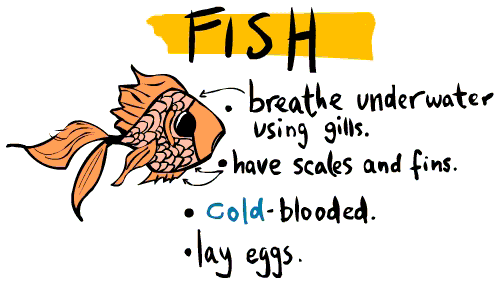
Fish are vertebrate animals, so today is time to learn about them. Play the video, watch and listen carefully!


Now, let's create our own Ocean!

Click on this link: http://www.sheppardsoftware.com/preschool/animals/ocean/animaloceancreate.htm

You can choose all animals that you want to be part of your Ocean. Remember! Not all ocean animals are fish!

Can you tell me how many fish have you chosen for your Ocean? Have you chosen any other vertebrate animal?

Ahora, ¡vamos a crear nuestro propio océano!

Tenéis que entrar en este link http://www.sheppardsoftware.com/preschool/animals/ocean/animaloceancreate.htm

¡Recordad que no todos los animales que viven en el océano son peces!

¿Cuántos peces habéis puesto en vuestro océano? ¿Habéis escogido algún animal que sea otro tipo de vertebrado?

Good luck and enjoy it!


martes, 12 de mayo de 2020

Birds

Good morning!

How are you today?

Today is Tuesday and it is a cloudy day ⛅.

Well, let's keep learning about vertebrate animals. Today is brids' turn. Are you ready? So, here we go!


Can all birds fly? Can you tell me any example?
You can answer these questions by writing in the comments.

¿Todos los pájaros pueden volar? ¿Me podéis decir algún ejemplo?
Podéis escribir las respuestas en los comentarios.

Then you can play another word search about birds :)


Good luck!

lunes, 11 de mayo de 2020

Mammals

Good morning!

Today is Monday and we start a new week! It is a cloudy day⛅

Do you remember that animals can be vertebrates and onvertebrates? I'm sure, you do.

Well, vertebrate animals can be also classified by some features in 5 groups.

Mammals


                                                                                                                                               Birds


Fish


                                                                                                                                   Amphibians


Reptiles


Today, we will learn more things about MAMMALS.


1. Are human beings mammals?
a) No, we aren't.
b) Yes, we are.

2. Let's play a game. Search and find mammals' names at this link

                                    https://happylearning.tv/en/word-search-mammals/

You can answer question 1 in the comments :) For game number 2 you don't need to write the words.

*Podéis contestar la pregunta 1 en los comentarios. Para el juego 2 (entrar a través del link), no necesitáis escribir nada aparte :)

If you want to know more information about mammals click HERE.

*Si queréis saber más información acerca de los mamíferos hacer click AQUÍ.

viernes, 24 de abril de 2020

Vertebrates and invertebrates

Good morning!

How are you today?

Today is Friday, so we start the weekend! Today is a beautiful sunny day 🌅

Since this week we have been studying about vertebrate and invertebrate animals, I want you to play this wonderful game to practice all things that you have learnt.

First, you can watch this new video to refresh the main features of each group of animals.


Now, click on this link and enjoy the game!


miércoles, 22 de abril de 2020

Invertebrate animals

Good mornig!

How are you today?

Today is Wednesday and it is sunnny🌅

As you know, we are talking about vertebrate and invertebrate animals. Yesterday, we learnt some things about vertebrate animals, so today is invertebrate animlas' turn.


Do you like invertebrate animals?

What is your favorite invertebrate animal?

Can you find two (2) invertebrate animals in the picture?


I'll read your comments or your mails with the answers😀

*Leo las respuestas en los comentarios o por mail 😀

Good luck!

martes, 21 de abril de 2020

Vertebrate Animals

Good morning!

Today is Tuesday and it is a cloudy day.

We have been learning about animals' habitat, the past few weeks.

Well, we will keep learning about animals. This time we will learn how we can classify animals depending on they have bones or they don't have bones.

Animals which HAVE bones are called vertebrates.

Animals that DON'T HAVE bones are called invertebrates.

Let's watch this video to learn more things about vertebrate animals.


Are human beings vertebrate or invertebrate animals?

Can you find in this picture any vertebrate animals?


martes, 24 de marzo de 2020

Desing your habitat!

Hello again!

I explained to you how to prepare homemade plasteline, in a previous post.

So, here you are my English challenge for this week!

You can prepare the plasteline and then you can create you favorite habitats, from the ones that we have been studied about (Savanna, Desert, Forest, Ocean and North Pole). I can't wait to see your wonderful work!

*Si no podéis hacer la plasti, podéis crear un póster con vuestro hábitat favorito. Cuando acabéis los trabajos, os animo a que me enviéis algunas fotos del resultado a mi correo. ¡Qué ganas de ver todo lo que construís!

Good luck and go for it!
Different Habitats: North Pole

Good morning!

How are you today? I am really happy because you are writing a lot of comments in the blog :)

Do you remember all tha habitats that we have learnt with the videos?

- Savanna.

-Desert

- Forest.

-Seas and Oceans

Today, we will learn about one last habitat: North Pole. Is it a cold or a warm place? Do you know any animal that lives in the North Pole? Can tigers and lions live in the North Pole?

(Espero vuestras respuestas en los comentarios. You can answer by writing a comment 😄)


viernes, 20 de marzo de 2020

Different Habitats: Forest

Hello!

Today is Friday and we will learn about another habitat... forests.

Do you like hiking in the forest? Have you ever found any animal in the forest? Which one? What is your favorite forest animal? Is there any National Park in Spain? What is its name? Where is it?

(You can answer in the comments)


jueves, 19 de marzo de 2020

Different Habitats: Seas and Oceans

Good morning!

How are you today?

Today is Thursday and we will learn about animals that live in the seas and oceans. Are you ready? What is your favorite aquatic animal?  Does your favorite aquatic animal appear in the video? Have you ever been at the Mediterranean Sea? Do you know any other sea or ocean? Can you tell me the name?

(Answer by writing a comment. *Contesta en los comentarios.)


lunes, 16 de marzo de 2020

¿Por qué es tan importante lavarse las manos?

¡Buenos días, chicos y chicas!

Os voy a dejar aquí un documento que os explica muy fácilmente porqué debemos quedarnos en casita estos días.

DESCARGAR

Una vez que lo hayáis leído, os voy a proponer un reto. La semana pasada, estuvimos hablando de lo importante que es lavarnos las manos antes y después de comer, antes y después de ir al baño, al volver de la calle... Pues bien, el reto consiste en realizar un pequeño experimento. A continuación os dejo los pasos que debéis seguir para llevarlo a cabo. 


¿Qué necesitamos?
Agua.
Pimienta negra.
Jabón (lavaplatos mejor).
Recipientes blancos.

¿Cómo lo hacemos?

1. El primer paso requiere utilizar nuestra imaginación. Debéis pensar que los granitos de pimienta negra son gérmenes (bichitos diminutos que no podemos ver a simple vista. Algunos de ellos, son los que hacen que nos pongamos enfermos).
2. Llena el recipiente blanco con agua y echar la pimienta negra. ¡NO os debéis pasar con la pimienta o el experimento no será tan chulo como debería!

3. Mete el dedo en el plato. ¿Qué ocurre con la pimienta?
4. Ahora mete el dedo en el jabón y vuelve a meter el dedo en el centro del recipiente.¿Qué ocurre esta vez?

¿Habéis descubierto por qué es tan importante lavarse las manos? ¡Contadme en los comentarios si os ha salido o no y qué os ha parecido! Será muy divertido, así que ¡a por ello!


viernes, 13 de marzo de 2020

Where do living things live?

All living things (animals, plants, people) live in different places.
Some live in the forest.
Others live in the jungle.
There are many that live in the oceans and seas.
And some of them live with us in the cities.
All these places are called HABITATS.

Listen the song and let's learn more about them!